Invariant
A wide ramp. Live cargo that walks — or drives — on and off. Port time measured in the cycle of that door, not in crane hours.
Ro-Ro · Energy product · Concept
The ramp is the invariant.
Tesla tech is the variable.
A purpose-built roll-on/roll-off ship whose hull, energy system, charging, and operations are Tesla-native. Vehicles load and unload under their own power — the same job as an ancient horse transport.
Lineage
Vehicles drive on. Vehicles drive off. The ramp is the geometry that survived every propulsion change from oar to oil to electron. This ship is not a rebadged car carrier. It is an extension of the Tesla energy and autonomy stack.
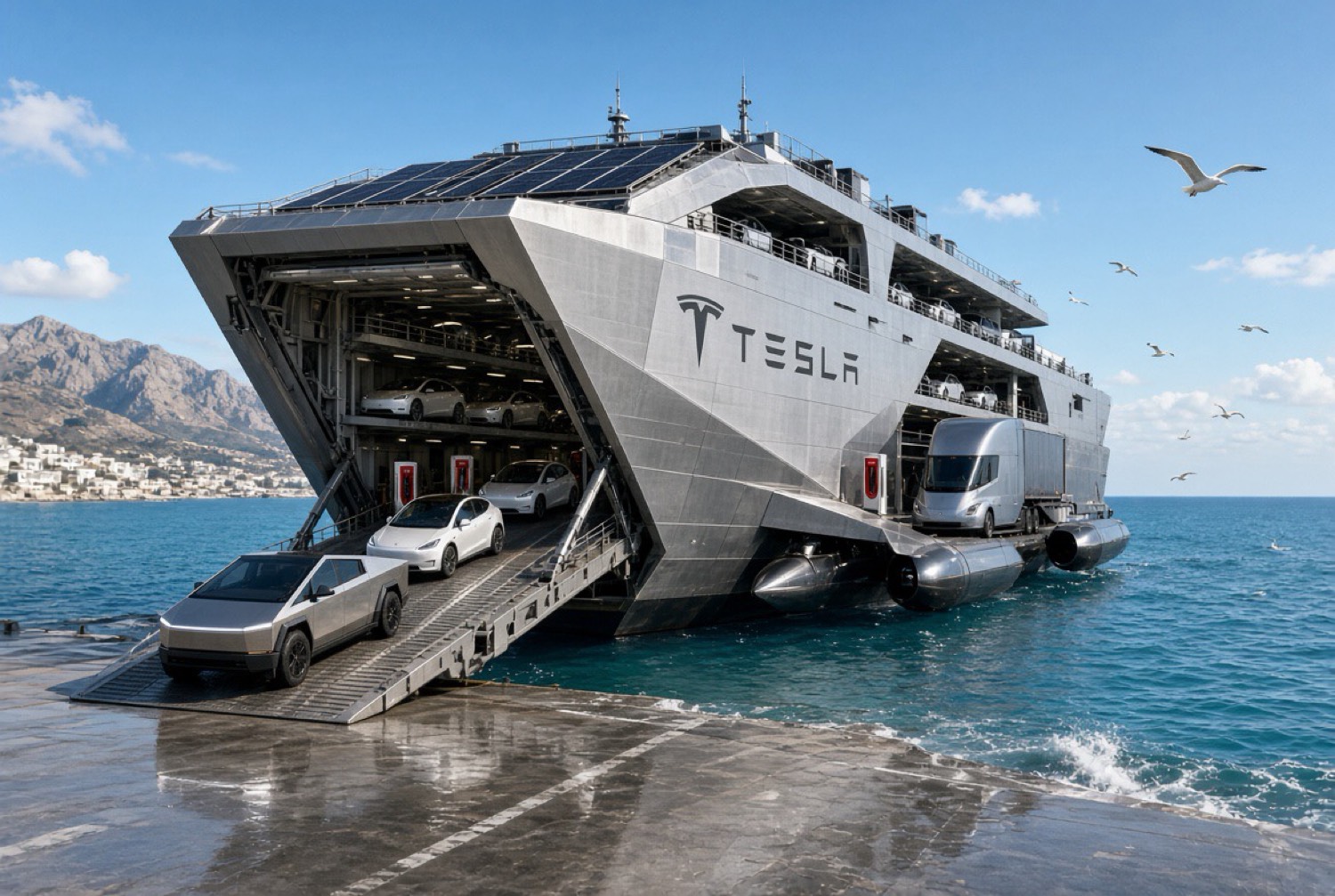
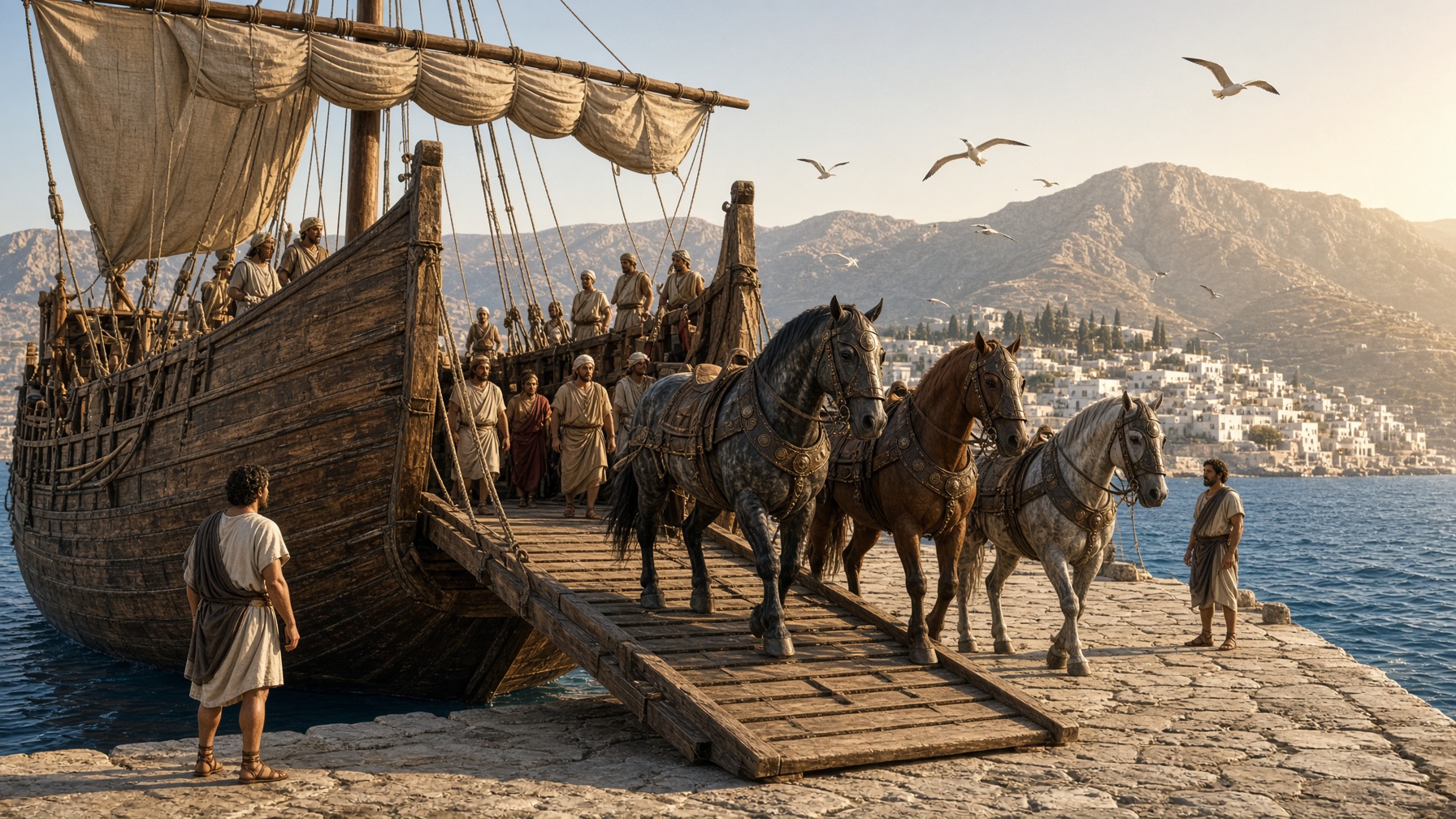
A wide ramp. Live cargo that walks — or drives — on and off. Port time measured in the cycle of that door, not in crane hours.
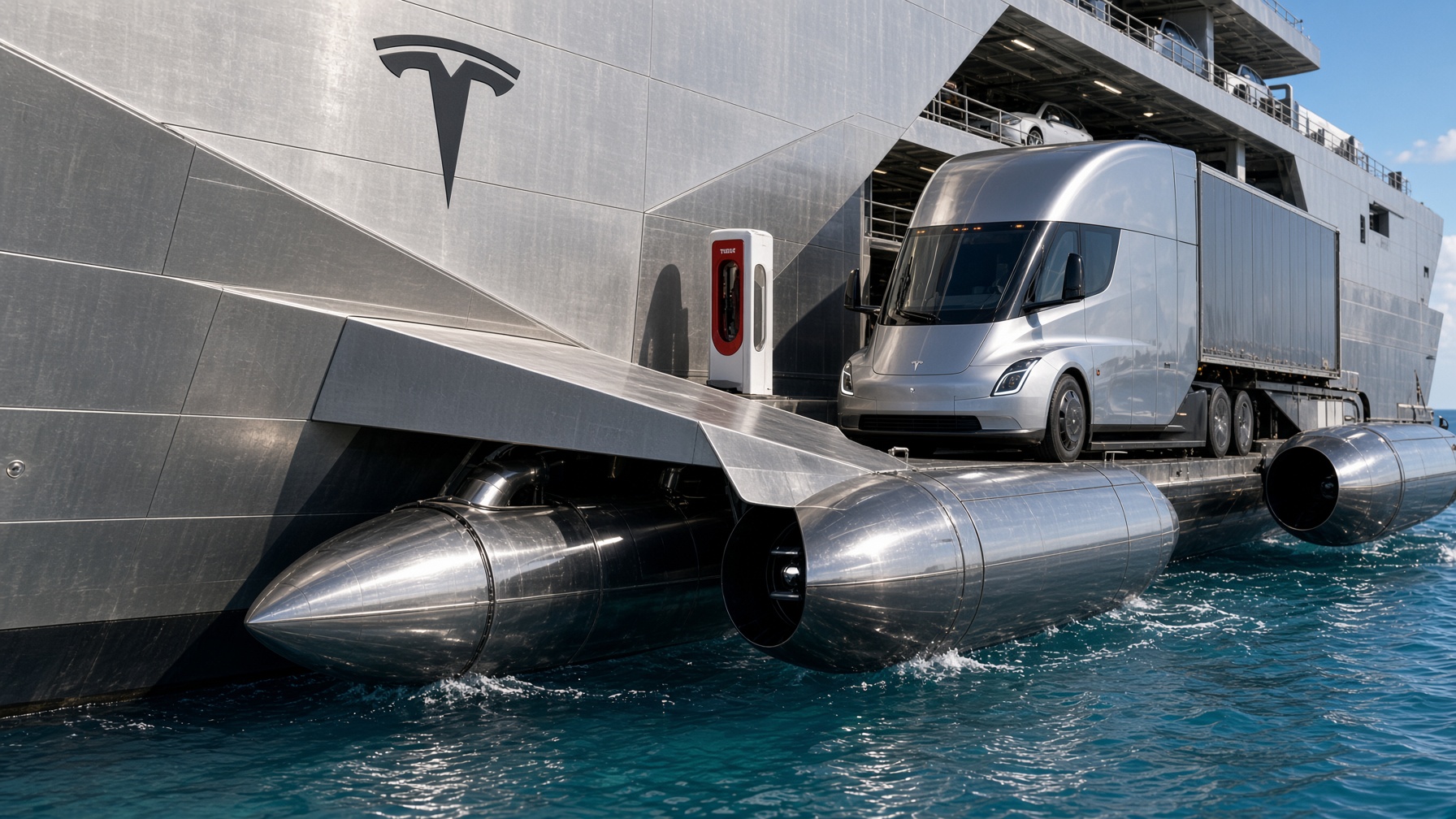
Stainless hull, Megapack, Superchargers, FSD stalls, azimuth pods, Starlink telemetry. Tesla tech, not a painted logo on a PCTC.
Factory to ship to Supercharger corridor to customer — one software domain. The ship is a moving storefront and an energy node.
Anatomy
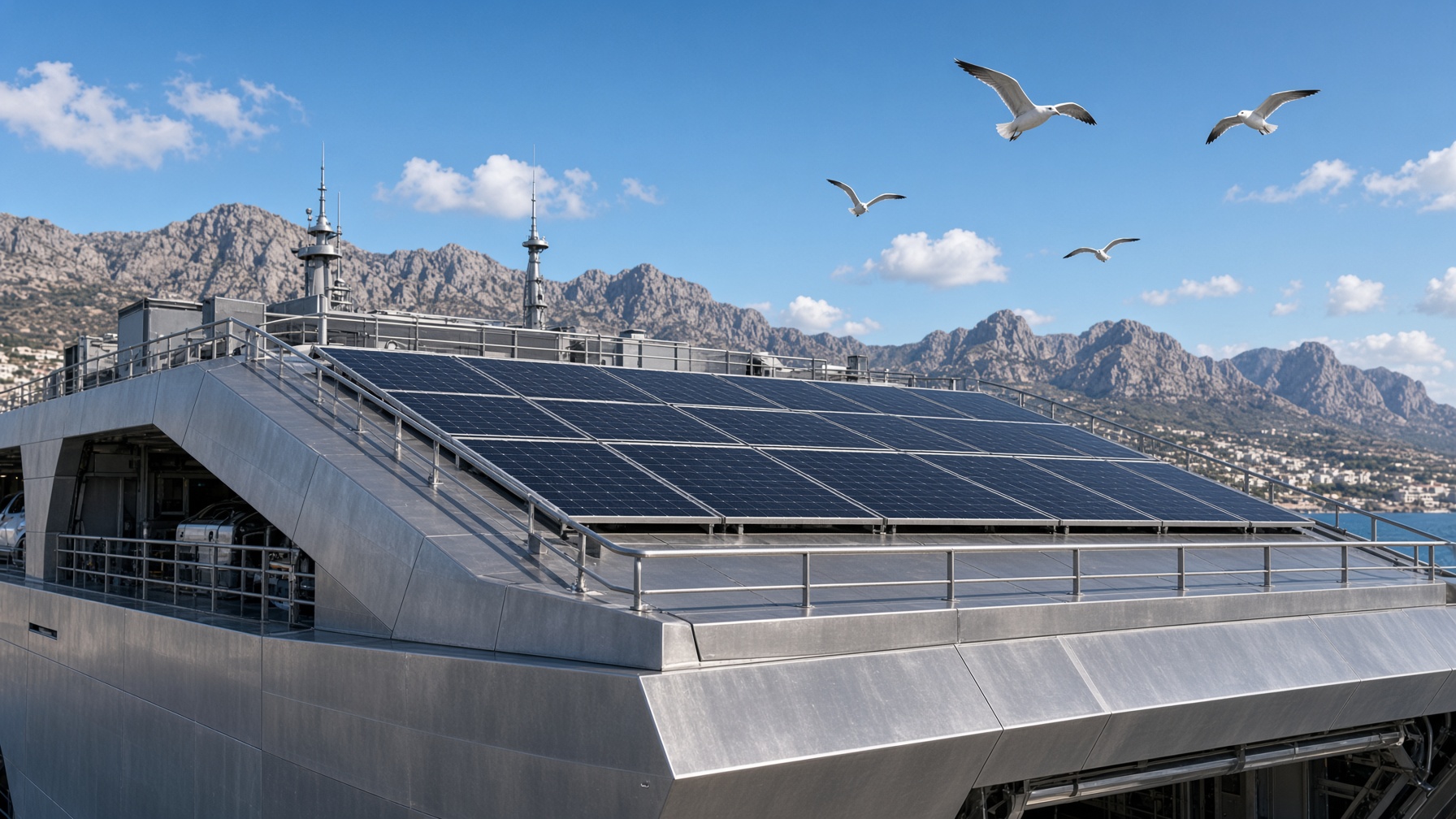
Click a station on the cutaway. The ramp is the invariant; everything else is Tesla stack — solar, stalls, Superchargers, Megapack, pods.
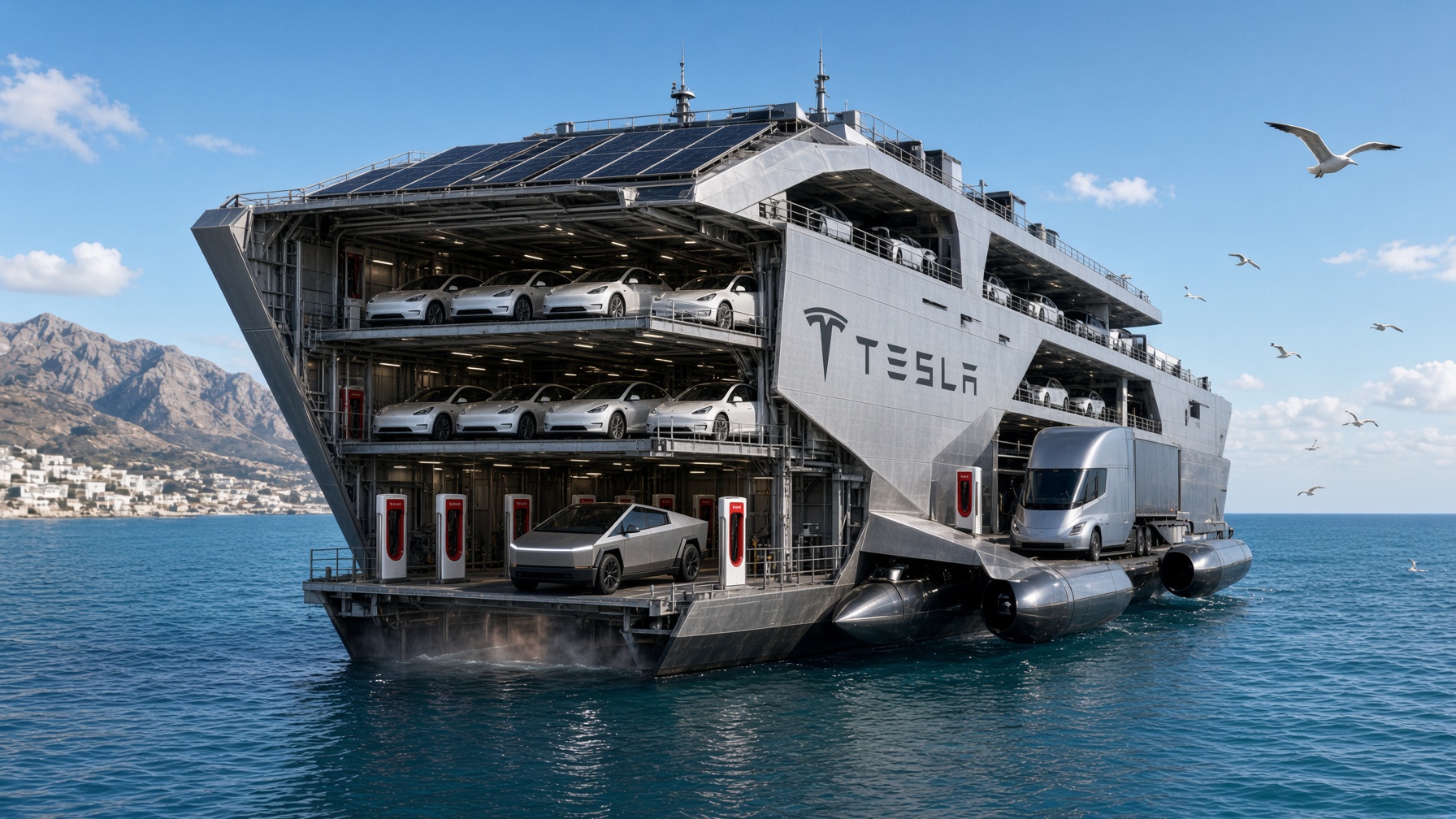
Operations
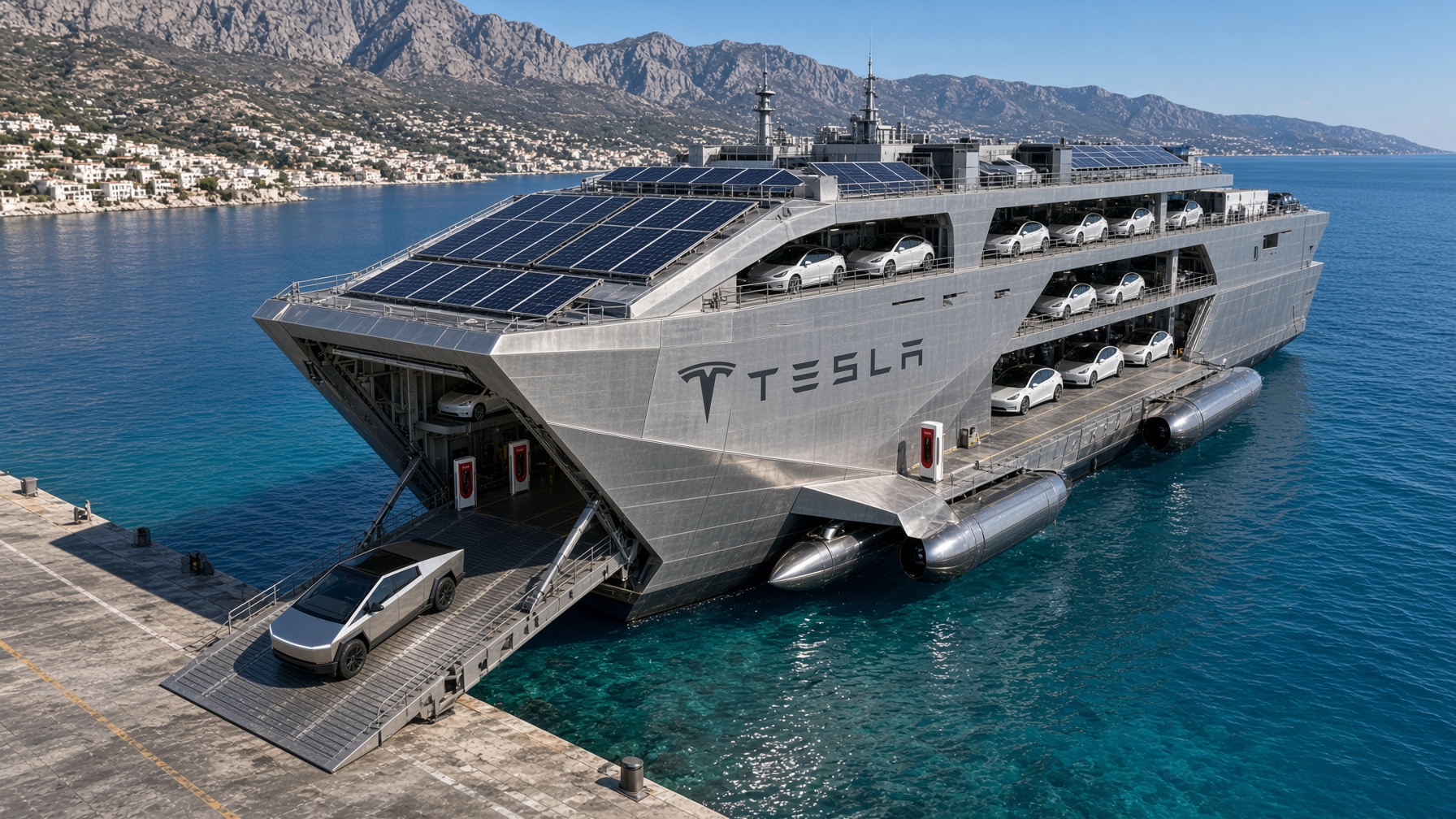
Approach. Azimuth pods place the bow on the mark. Cameras, radar, and optional lidar run docking assist. Fair-weather turns need no tugs.
Energy
Solar, shore, Megapack, and parked packs talk to one another. Mode decides the flow. Batteries do not pretend to cross an ocean alone.
Shore power + solar. Propulsion idle. The ship is a grid asset.
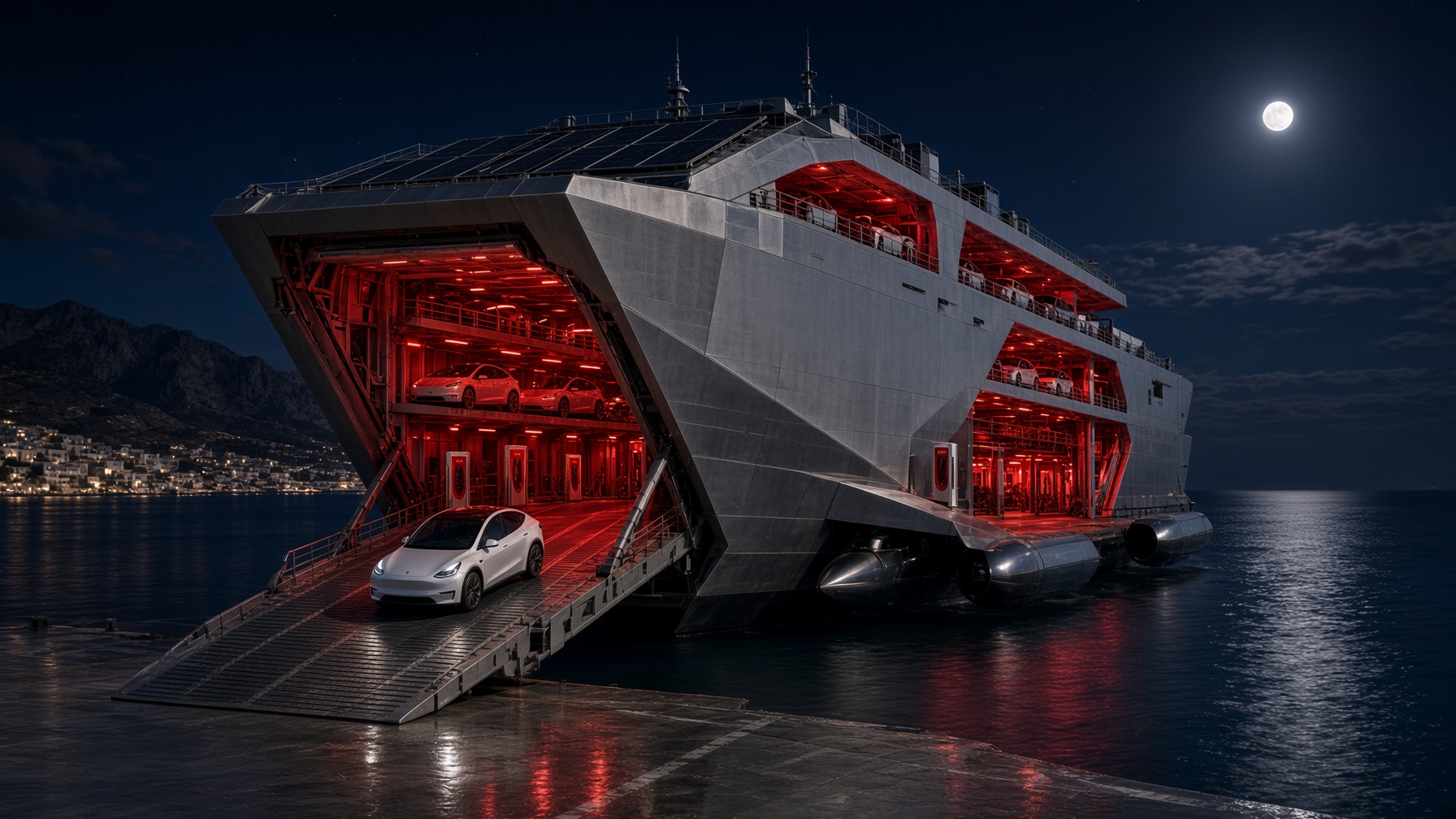
Parked packs can buffer the Megapack or be preconditioned before landing. Alongside, the ship can charge cheap and avoid peak — a node on Tesla energy markets, not a dead load at the quay.
Weather-deck solar covers hotel and trickle. Superchargers run from shore or pack so destination grids do not take a first-day spike from four hundred empty vehicles.
Landing
Quay, shore power, Supercharger corridor on land. Fast ramp cycles, no heavy-fuel plume over the city. The ship peak-shaves the port load from its own Megapack.
Stack
Class societies and flag states are slower than Tesla software. Capex is higher than a standard PCC. Payback is fuel, turns, premium cargo, and energy services — not a logo on the funnel.
No cranes. Faster port turns. Lower cargo damage and insurance versus lift-on/lift-off.
Vehicles land with range. Fewer first-day grid spikes at the destination corridor.
Megapack peak-shaves port loads, powers hotel, buffers solar, and can sell into energy markets alongside.
Precise docking, quieter holds, fewer moving parts. Zero stack in port and coastal zones.
Unpainted high-strength clad panels. Corrosion resistance, low paint cycle, Cybertruck language.
Cars self-park in assigned stalls and self-disembark in sequence when unsupervised FSD is legal.
Parked fleet as distributed storage, or preconditioned before landing. One software domain.
Live pack health, location, and discharge state for every VIN at sea. Closed-loop Tesla logistics.
01
First car carrier designed as an energy product, not a steel box that happens to carry EVs.
02
The cargo is smarter than the ship’s traditional crew tools. The fleet can choreograph its own load.
03
Ship plus cargo is a multi-ten-MWh mobile battery. In a high-renewables grid this is storage, not just load.
04
When unsupervised FSD is legal, the crew of the cargo includes the cars themselves.
05
If Tesla or a partner gigacasts large hull modules, iteration speed beats traditional yards.
06
One ship is a prototype. Value appears when the same stack talks to Supercharger and Megapack networks on land.
The hard problem
This is the engineering problem, not the ramp. Dedicated thermal runaway isolation, deluge, and deck segregation are first-class design — or the ship is a brochure.
Thermal runaway is contained at the stall, not the hold. Intumescent curtains and steel cofferdams between every four vehicles.
Water mist for adjacent packs, dedicated off-gas venting to the weather deck, and gas detection on every frame.
Passenger EVs, Semi, and Megapack rooms are separate fire zones with independent suppression. A Semi event does not see a Model Y hold.
Thermal cameras on every stall, pack telemetry from the vehicles themselves, and a manned fire post until robotics take the ramp watch.
Regulatory factor: the design must be certifiable as a ship first, a Tesla product second. No flying ships. No ignoring fire code.
Fleet telemetry
Hold 02, lower deck. Live pack health over Starlink — a floating battery lab. Select a stall.
Mean SoC 66%
Occupied 16/18
Charging 8
Concept figures, not a class-approved design. One ship is a prototype. Value appears when the same stack is used on a fleet.